Dead skin
You shed skin all day, every day.
Tiny flakes fall wherever you are, and the couch you watch TV on and the bed you sleep in catch a big share. That skin is exactly what dust mites feed on, so where it piles up, they move in.
Furniture, upholstery & mattresses · Toccoa, GA
Dead skin, pollen, pet dander and dust mites settle deep into the fabric you sit and sleep on every day. Once a year, we steam clean it out of your sofas, chairs and mattresses with truck-mounted hot water extraction. Most pieces are dry in a few hours.
What builds up in a year
Upholstery works like a filter. Every time you sit down, it catches a little more of what’s in the air and on your clothes. Vacuuming gets the surface. The rest works its way down.
Dead skin
Tiny flakes fall wherever you are, and the couch you watch TV on and the bed you sleep in catch a big share. That skin is exactly what dust mites feed on, so where it piles up, they move in.
Outdoor pollutants
Anyone who’s parked a truck in Northeast Georgia in April knows what pine pollen season looks like. It rides in on shoes, clothes and open windows along with road dust, soot and smoke, then settles into the fabric and stays there long after the season ends.
Pet dander
Dander is made of microscopic flakes of skin that cats and dogs shed constantly. It’s light, it’s sticky, and it clings to upholstery fibers, which is why allergy sufferers can react in a room even when the pet isn’t there.
Dust mites
Dust mites thrive in warm, upholstered places with a steady supply of skin to eat. Their droppings are one of the most common indoor allergy triggers there is, and they work down into cushions and mattresses where a vacuum can’t follow.
Body oils & spills
Skin oil, sweat, hair products, juice and coffee coat the fibers and hold dust in place. That’s the grey shine on armrests and the dark patch on a headrest, and it’s why a quick wipe never quite gets it.
Cleaning for health
Every time someone sits down, a little puff of what’s in the cushion goes back into the room. When that build-up is gone, there’s simply less of it to breathe. Pick what matters in your house.
What’s going on
Dust mite droppings, pet dander and pollen are some of the most common indoor allergy triggers, and upholstery holds onto all three. Flop onto the sofa and you send a fresh dose into the air at nose height.
How a yearly clean helps
Hot water extraction flushes allergens out of the fibers and pulls them into our truck, instead of pushing them around. Fewer triggers in the cushions means fewer in the room.
What’s going on
Fine dust from outdoor pollutants like soot, smoke and road dust settles into fabric along with mite and pet allergens. Stirred back up, those fine particles are well-known asthma triggers.
How a yearly clean helps
Removing the reservoir of dust that lives in your furniture takes one steady source of irritants out of the house. It pairs well with a good vacuum and regular filter changes.
What’s going on
Mite allergen and old body oils collect right where skin meets fabric: armrests, headrests, recliner backs and the top of the mattress. For sensitive skin, that contact adds up.
How a yearly clean helps
We pre-treat the oily, high-contact spots and rinse them thoroughly, so the surfaces you touch most are actually clean, not just clean-looking.
What’s going on
Your mattress is where you’re closest to dust for the longest stretch, around eight hours a night, face down in it. It’s warm, it’s full of shed skin, and dust mites love it.
How a yearly clean helps
Steam cleaning the mattress removes the build-up that sheets and mattress pads can’t, so the place you rest isn’t working against you.
What’s going on
Small children breathe faster and play with their faces right in the cushions. Pets add dander and bring in whatever they rolled in outside. Busy households build up faster.
How a yearly clean helps
A deep clean resets the furniture your family actually uses. With little ones or pets, many of our customers book every six months instead of twelve.
We’re cleaners, not doctors. If someone in your home has allergies or asthma, your doctor is the best guide, but a cleaner house never hurts.
How we steam clean
What most people call steam cleaning is technically hot water extraction. We push hot rinse water into the fibers and pull it straight back out with strong suction from the truck-mount, carrying the dirt, allergens and old residue with it.
We check the fabric, its cleaning code, any stains and worn spots, and talk through what to expect before we start.
Loose soil comes off first. Then we pre-spray, spot-treat stains and work on oily armrests and headrests.
An upholstery tool rinses and extracts in the same pass, so dirt and moisture leave together.
We brush the nap so it dries soft and even. Most fabrics are dry and ready to use in a few hours.
You look it over with us before we leave. If a spot isn’t right, we re-clean it. That’s the pledge.
From our jobs
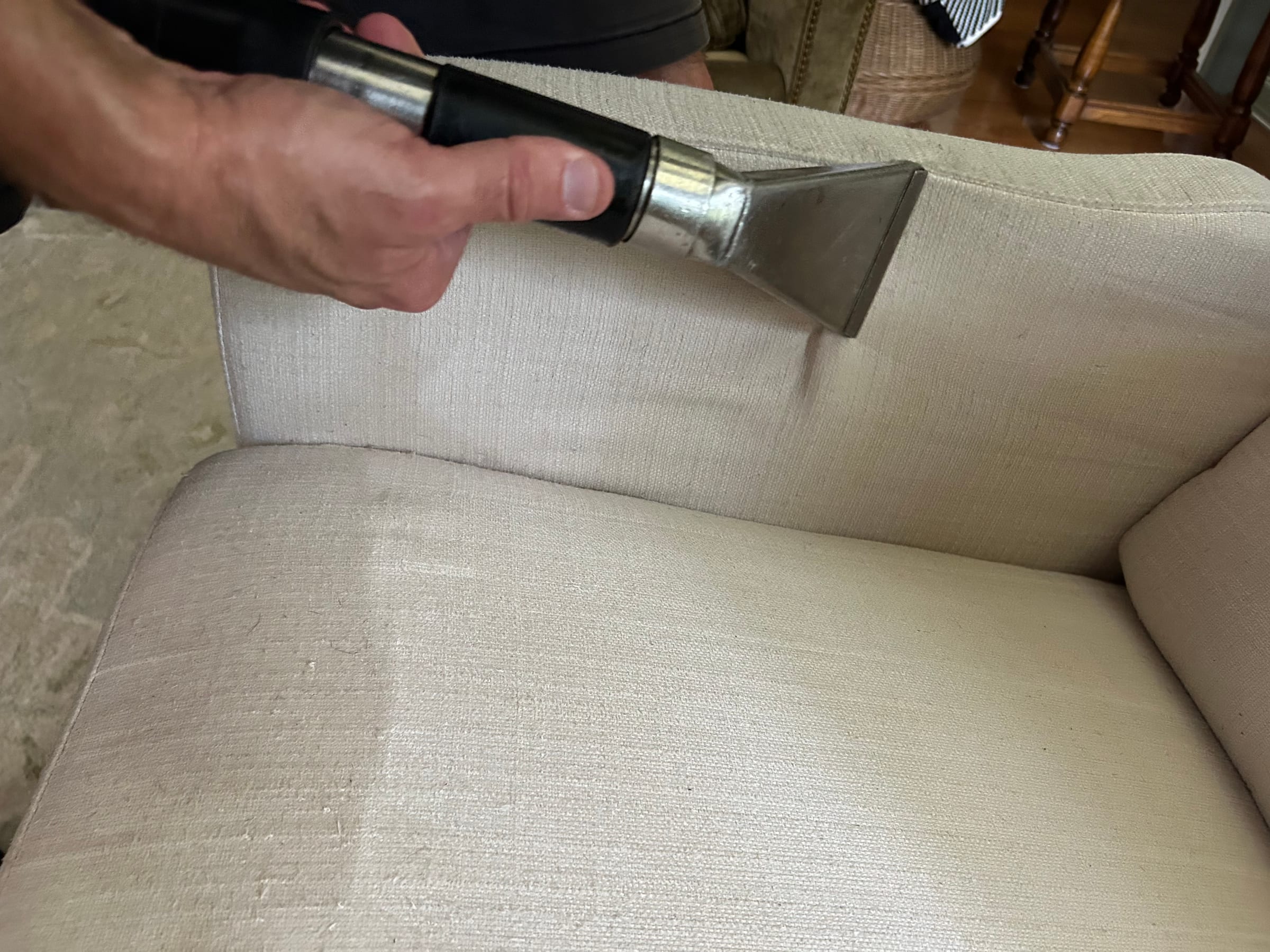
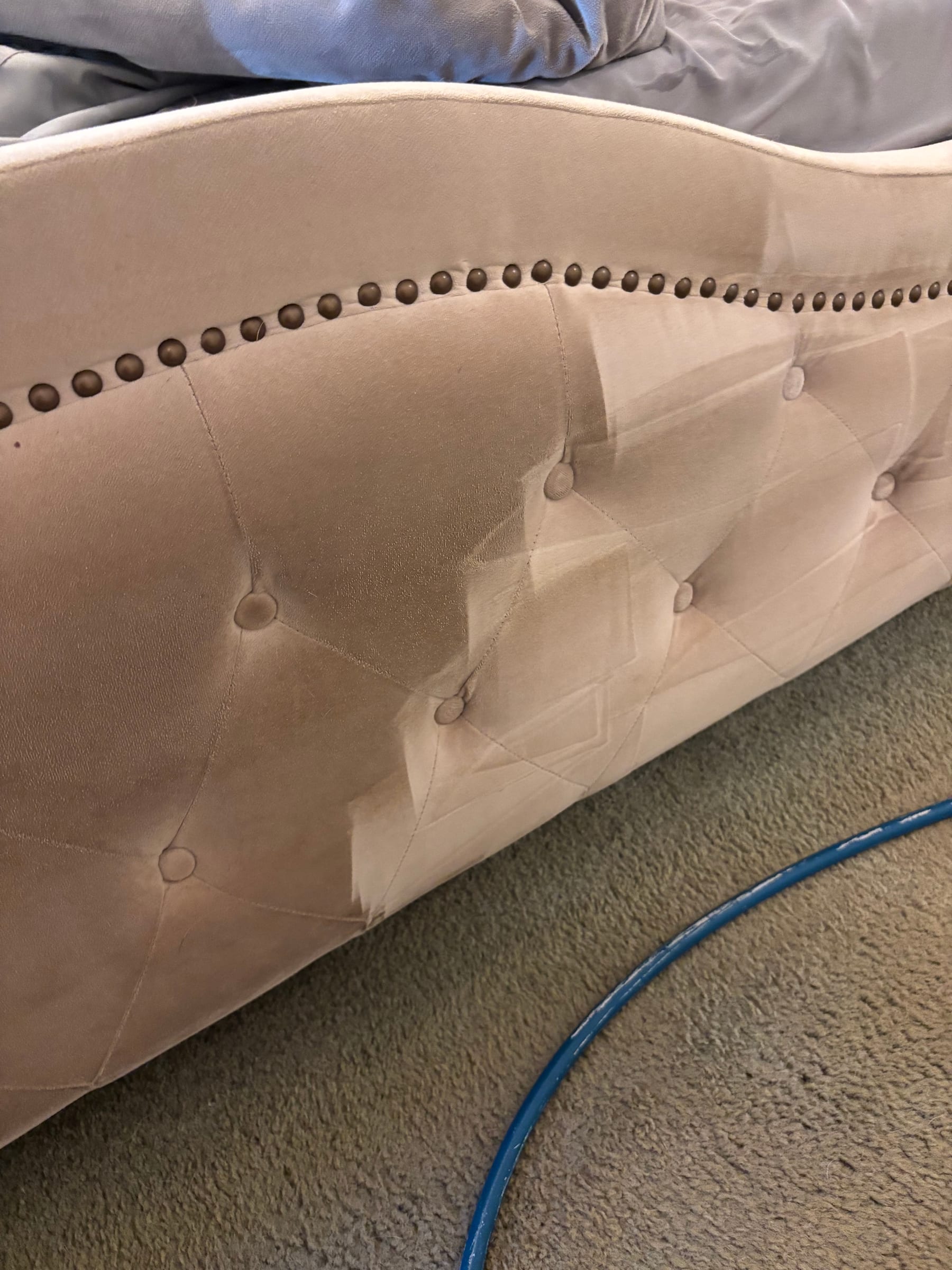
Sofas, sectionals, recliners, dining chairs, ottomans and headboards. If it’s covered in fabric, ask us about it. These are photos from our own upholstery work.



Mattress cleaning
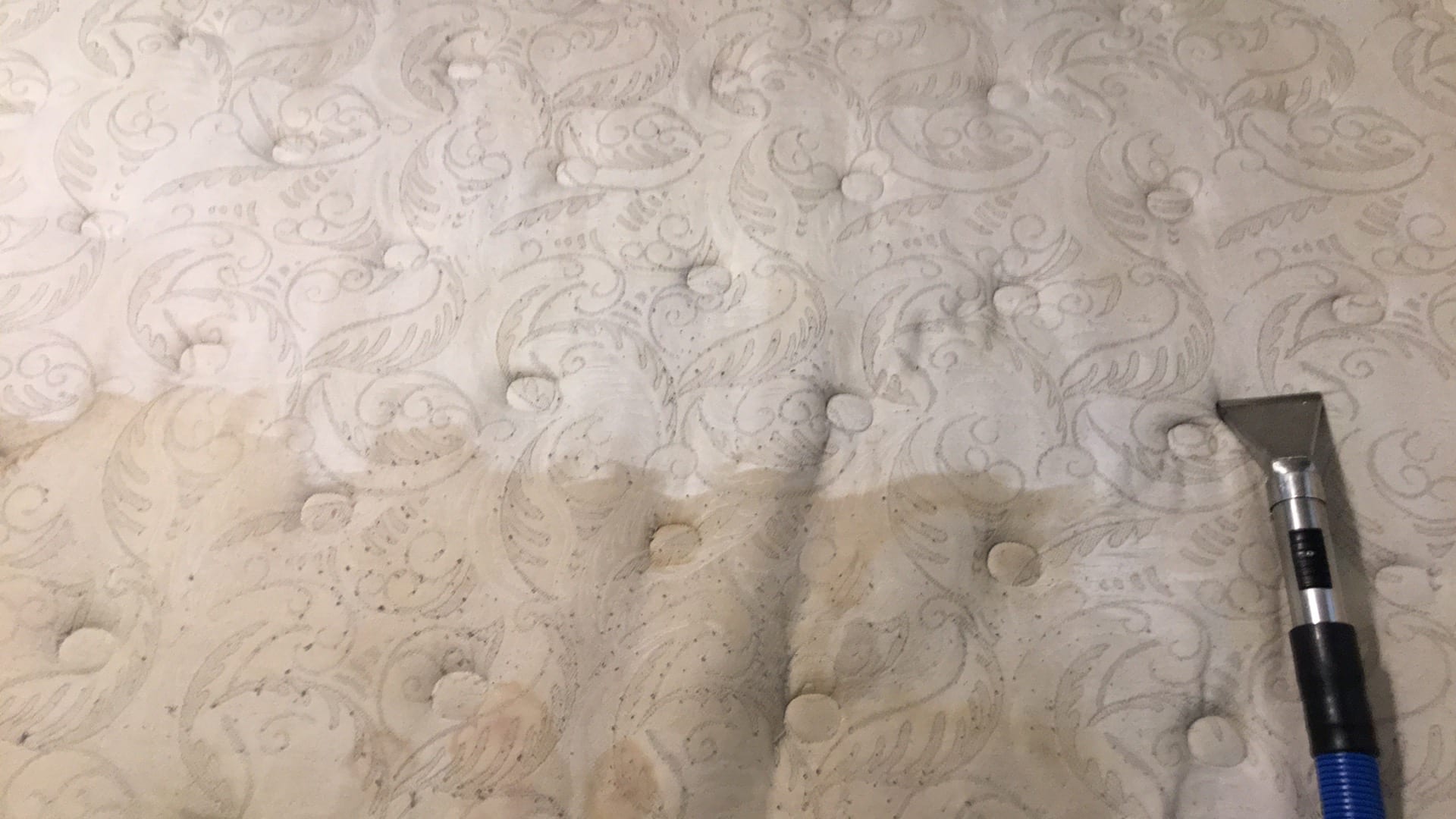
Sheets get washed every week. The mattress underneath soaks up sweat, skin and body oil for years and never gets more than a flip. It’s the warmest, most skin-filled spot in the house, which makes it the dust mite’s favorite address.
We steam clean mattresses the same way we do upholstery: vacuum, pre-treat, then hot water extraction with strong suction so very little moisture is left behind.
Why once a year
Build-up doesn’t happen overnight. It creeps in a little every week until the fabric looks dull, the arms look grey and the room never quite smells fresh. A yearly deep clean resets it before it gets there, and it helps your furniture last longer too, because grit that stays in the fibers wears them down.
Good to know
No. Most people call it steam cleaning, but what we actually do is hot water extraction. Hot rinse water goes into the fabric and is pulled right back out with strong suction from our truck-mounted unit, taking the dirt and allergens with it.
Normally about 2–3 hours. Ceiling fans, open windows or the A/C help it along.
No. If the fabric is made for this type of cleaning, hot water extraction won’t shrink or fade it. We check the fabric before we start.
Mostly, yes. During our initial inspection we’ll determine whether the fabric is cleanable and tell you what to expect before we start.
Call (706) 491-7530 for a free estimate.
Yes. Just let us know when you book.